


Fairy Tale Analysis
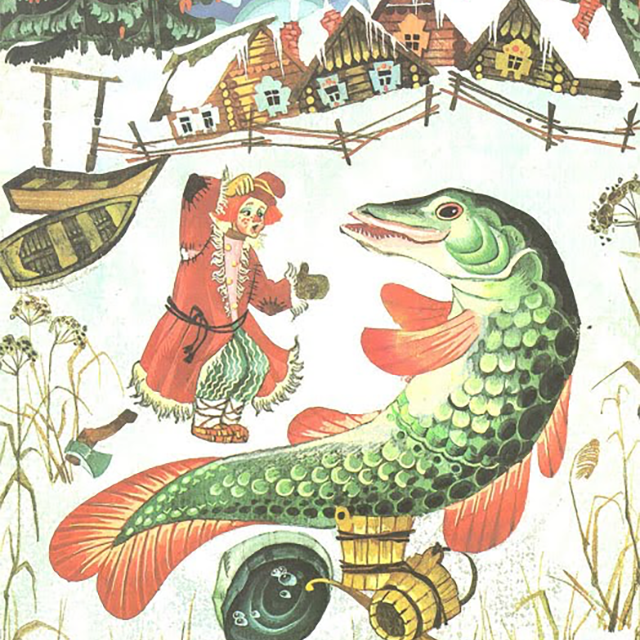
By the Will of the Pike


$
In a quiet Russian village lived an old man with three sons. The two elder brothers were strong and diligent, always working and providing for the household. The youngest, Emelya, was quite the opposite: slow-witted and content to lie on the warm stove ledge all day, doing nothing at all. While his brothers labored in the fields or went to market, Emelya seemed useless, and his sisters-in-law often scolded him for his idleness.
One winter’s day, when the brothers had gone to market, the women pressed Emelya to fetch water from the river. At first he refused, unwilling to stir from the stove, but when they promised him presents if he obeyed, he reluctantly agreed. He dressed, took two pails and an axe, and trudged to the frozen river. Cutting a hole in the ice, he filled the pails, but then bent down to peer into the water. To his astonishment, he saw a great Pike swimming beneath the surface. Quick as a flash, he caught it in his hands.
Delighted, Emelya thought of the fine soup the fish would make, but the Pike began to speak in a human voice, pleading for its life. It promised Emelya rich rewards if he let it go free.
Working with Fairytales
For Jung, fairy tales reflected the anatomy of the psyche. According to Marie-Louise von Franz, fairy tales represent “the purest and simplest expressions of the processes of the collective unconscious.” Stripped of the cultural, historical, and personal layers that often obscure myths and legends, fairy tales offer the clearest window into archetypal patterns at work within the psyche.
In each session, working with a fairy tale involves four steps:
- Reading the tale — engaging directly with the narrative.
- Exploring the imagery — identifying the key symbols and motifs.
- Psychological interpretation — understanding the archetypal meaning and its relation to the collective unconscious.
- Personal reflection and application — discovering how the tale’s message relates to one’s own life and individuation process.